GUNSTOCK BLANKS


A Personal History
I bought my first stick of wood in 1958 while going to gunsmith school in Colorado. It was a gorgeous two-piece myrtlewood blank and I paid $7.50 for it. My, how times have changed! I had my own gunshop from 1960 to 1963. It was like having all the work a person could want. However, you were working for minimum wage. I then pursued a career in gaming for 25 years but I still had a love for beautiful wood. While working in the gaming industry, I continued to accumulate gunstock blanks. I realized that I wasn't going to live long enough to make them all into beautiful gunstocks. Thus, a hobby was born.

The Desert, Mother Nature's Kiln

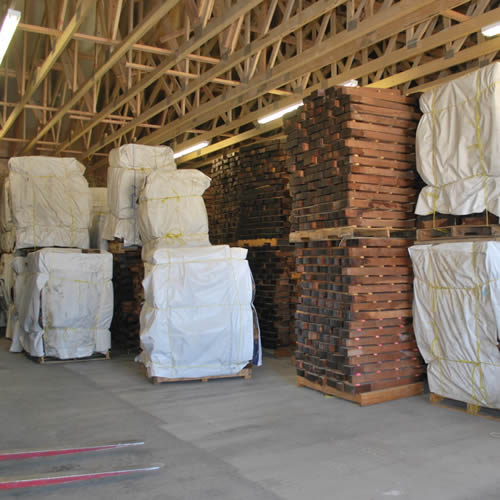
The dry climate in Las Vegas is very conducive to wood drying. We have many days in summer with triple digit temperature and single digit humidity and no one can dry wood as well as Mother Nature. Another bonus is that Las Vegas has 40 million visitors a year. When choosing a gunstock blank, it is best to pick your own. Obviously, for those who don't come to Las Vegas, a web site and a digital camera are the next best things.

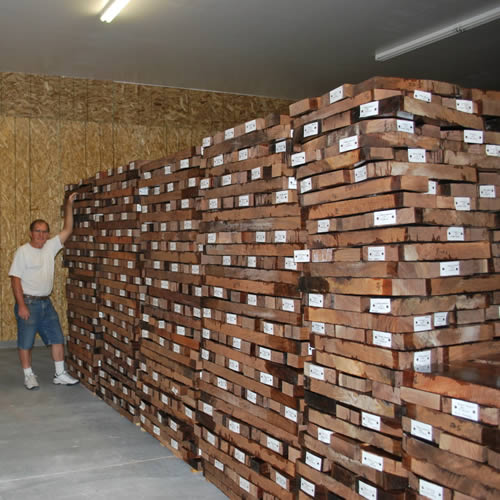
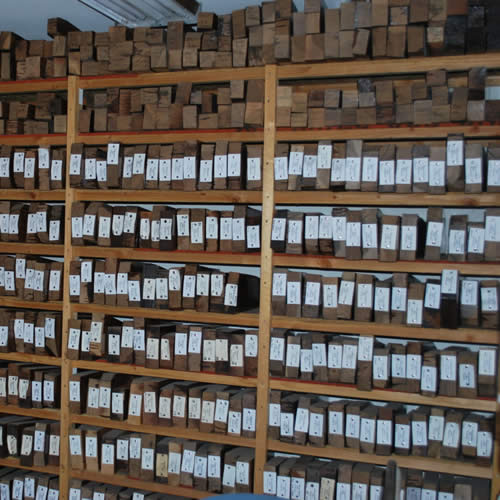
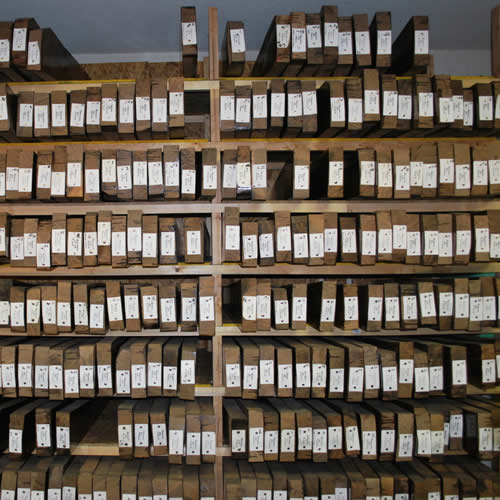
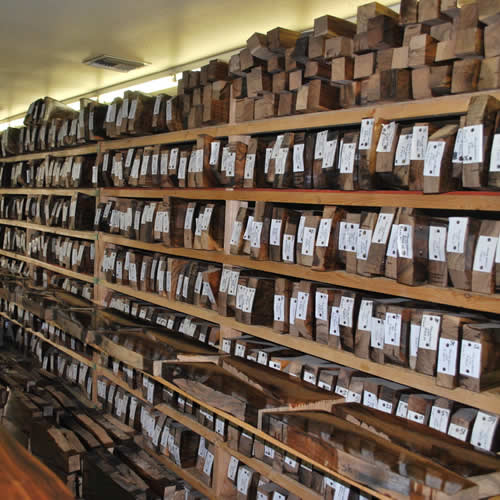
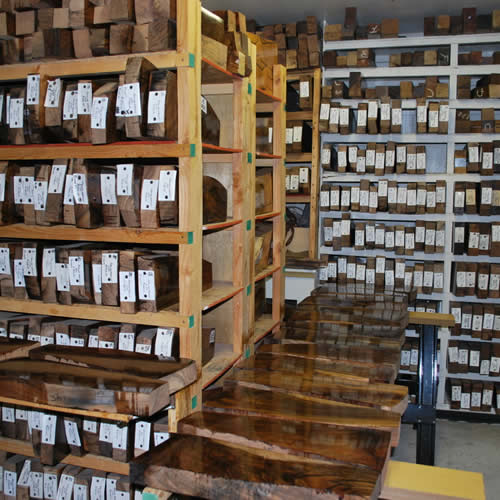
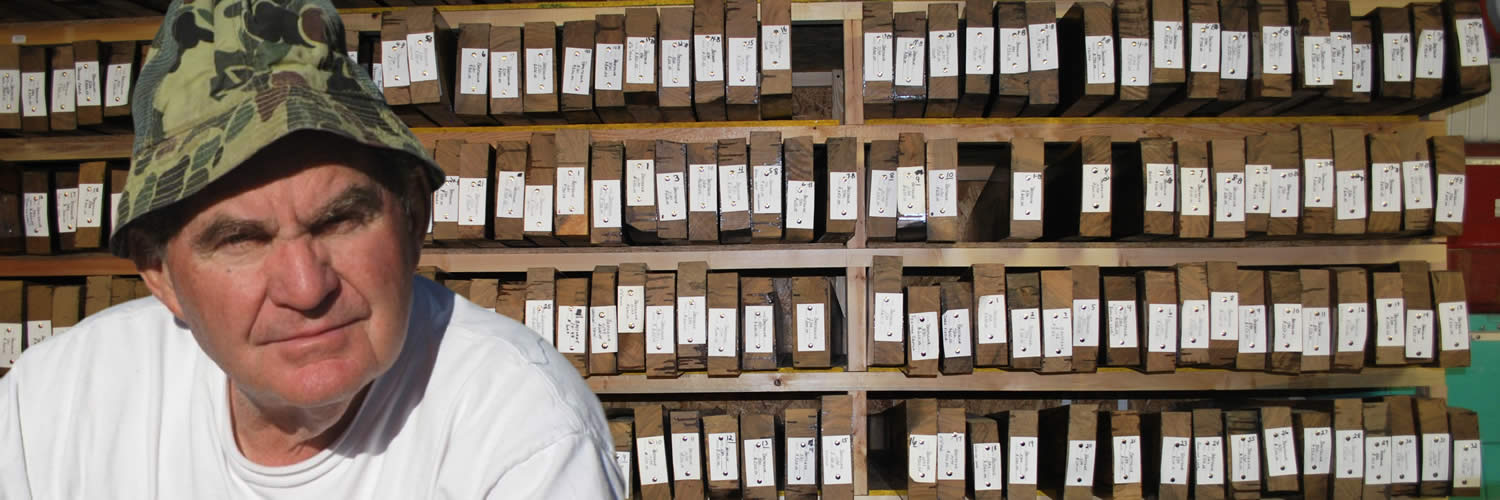
Currently I have 30,000 gunstock blanks in various stages of drying. I have English walnut, black, claro and bastogne walnut. In addition I have shell, also called quilt or flame maple, fiddleback also called curly or tigertail maple. As stated, all of my blanks are air dried and a moisture meter is put on every blank before it is sent out. These blanks will measure about 10% moisture. I have a blank here that I have had since 1961 and it is 9%. I continually rotate my stock as I do turn over quite a few pieces. I also have an excellent supply of English shotgun blanks for over/unders, pumps and automatics. These represent that overused word, "exhibition". I also have dry ebony for tip and cap material.

Definitions

A blank is a block of wood from which a stock is made.

A stock is a semi-inlet for a particular gun. I have blanks only. I do not have any semi-inletted stocks.

Wood Descriptions
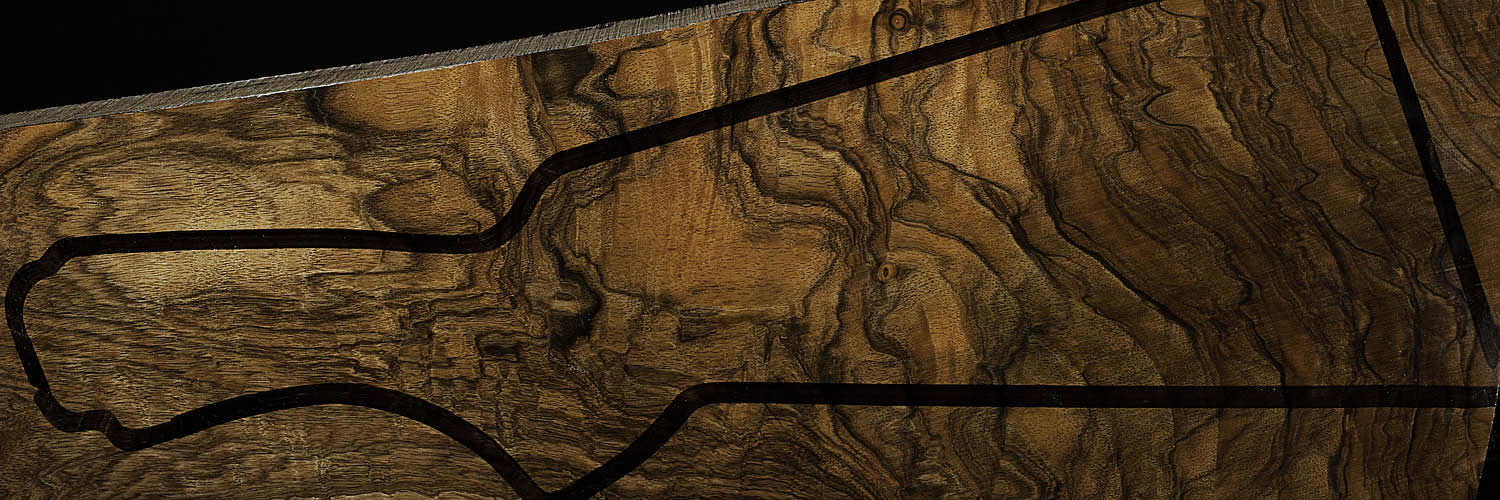
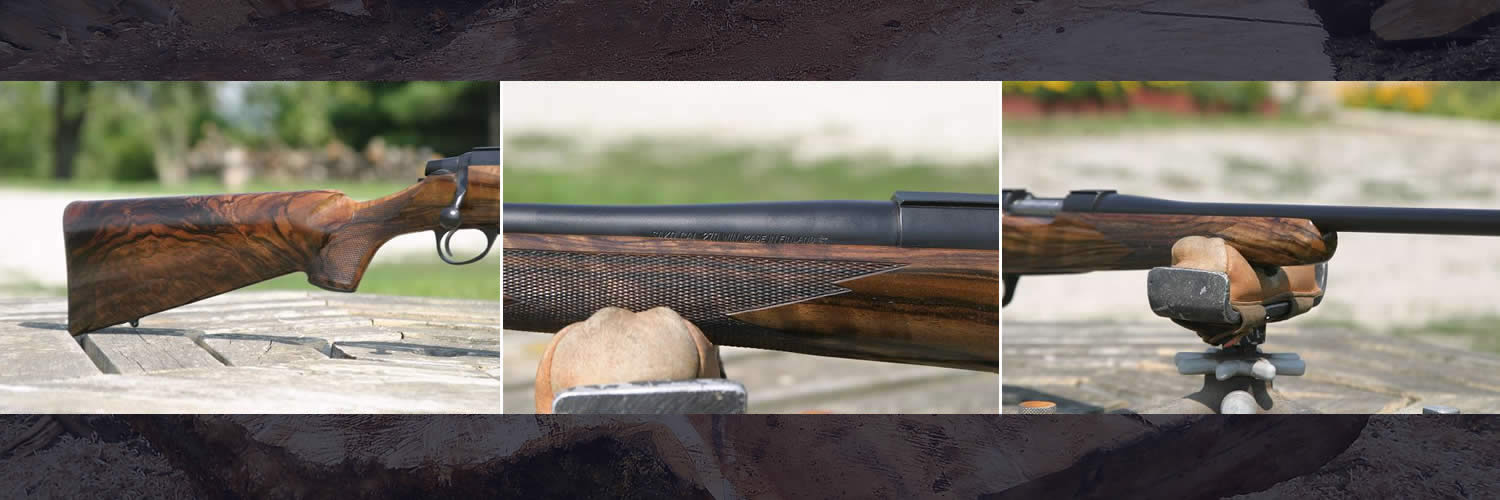
I have California English which is the finest and also the most expensive of gunstock woods. It can be striped. However, the best figure is marble or crotch wood. Most California English is dark but a small percentage can be honey colored, also called French walnut.

Black walnut from California is also commonly called claro walnut. A nice piece of California claro can be purchased for not a great deal of money.

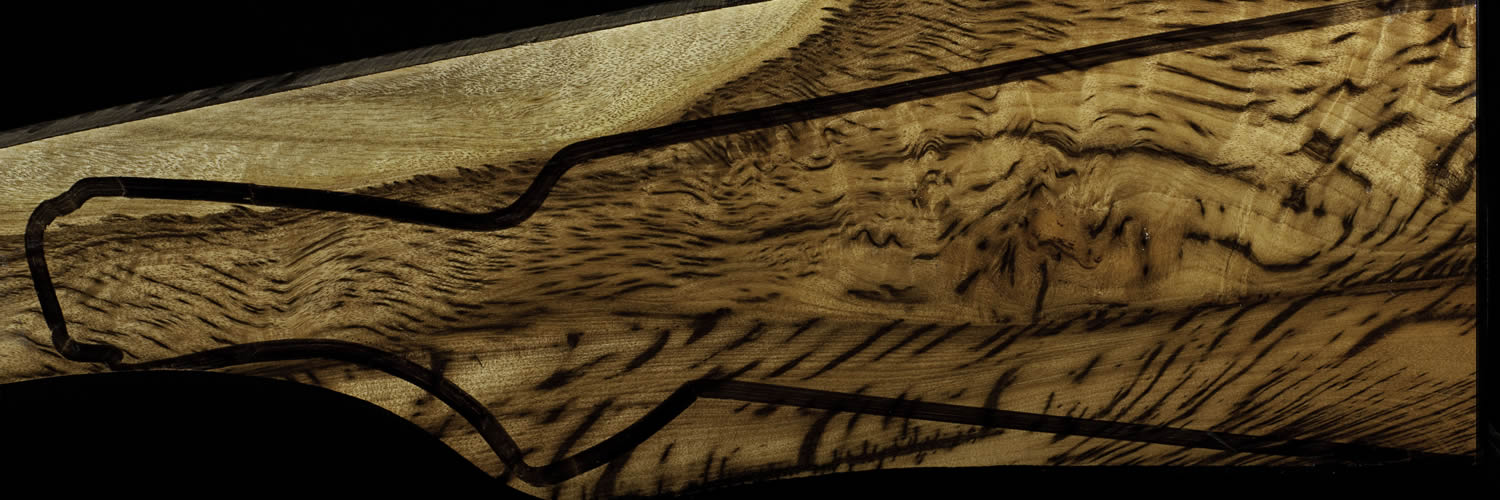
Bastogne walnut is the densest and heaviest of the walnuts. It is highly figured and is a great choice for large caliber rifles.

Myrtlewood is a light colored wood with many varying colors for contrast.

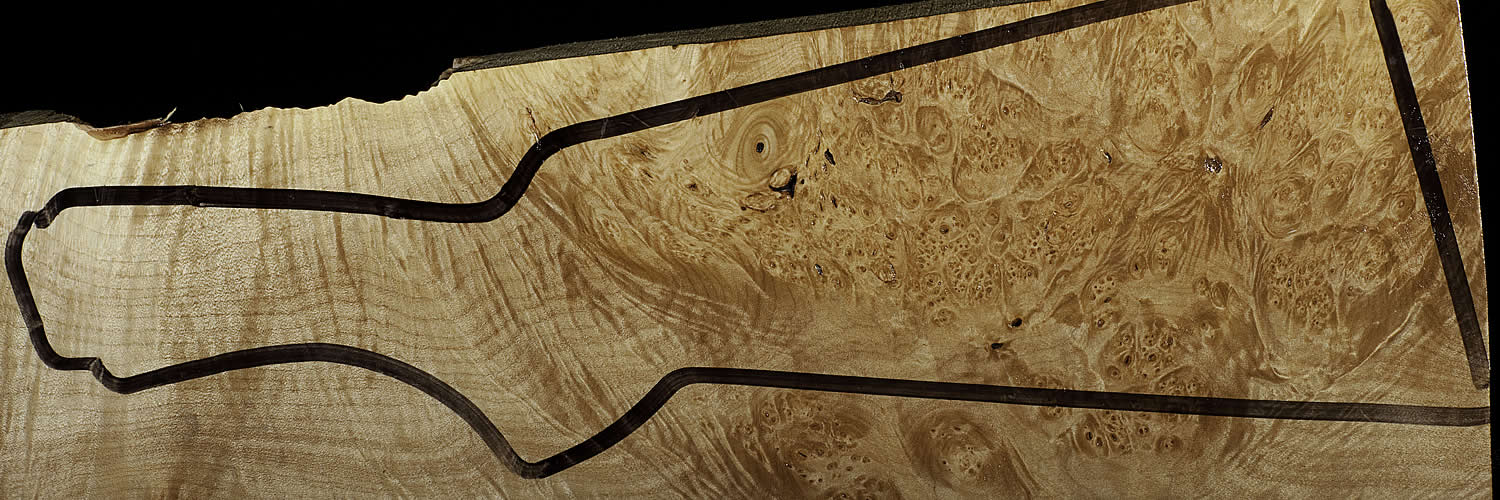
Western broadleaf maple produces three types of figure. Fiddleback is the most common type. Shell maple is aptly named because it looks like a tortoise shell, and finally burl which has many small eyes as figure. It is often confused with birdseye maple. But birdseye is an eastern maple with a completely different look.

Burl is Tricky

I have walnut, myrtle and maple burl. For those of you inquiring about burl, remember burl has no strength capabilities and always has some sort of flaw. I do have a few pieces of burl that have wood in the strength area of the stock and burl in the butt. If you buy burl, you will have lots of holes to fill and you must accept that with the beauty of burl.

Defect Disclaimer
The fancier the wood, the greater chance there will be of having a defect. My policy on defective blanks is as follows:
If you purchase a blank and a defect appears after it has been turned,  if it is a small void, it should be filled. The greatest English gunsmiths were filling voids almost 200 years ago. If the flaw opens up and threatens the strength of the blank, I will replace the blank provided the blank is returned to me for my visual inspection.

Pricing
Asking the price of a blank is like asking the price of a car. English walnut in high grade is very expensive. However, in the same grade, it is less expensive in a smaller blank. English walnut can run from $50 to $1500 depending on the grade. Maple blanks can run from 50 to $400. The lowest price blanks are $25 and they are rather plain in maple or claro walnut.

Purchasing
If you are interested in purchasing a blank, what works best is for you to tell me the type (maple, walnut, etc.) of wood you want, whether it is a one or two piece blank, the type of gun, gauge or caliber and what your budget will allow you to spend. I will then send you via email or mail, pictures of both sides of approximately 10 to 15 blanks. In doing so, you will get the piece of wood at the price you want to pay. I do not have a catalog as sending current wood pictures works better than sending you an outdated catalog.

Cecil Fredi

Please be prepared to give me the following information:

  • Species of wood,
  • One or two piece,
  • On two piece, is it straight grip or pistol grip?
  • Type of gun,
  • Gauge or caliber
  • Budget for the project

If you are serious about purchasing a blank to make a stock, I can be reached by phone at (702) 382-8470, Fax:(702) 387-0071, e-mail: blankscf@cox.net, or U.S. Mail: Cecil Fredi Gunstock Blanks, 2017 Pinto Ln., Las Vegas, NV 89106-4018

Preview The Wood